


The penetration testing market is experiencing significant transformation in 2025, driven by AI automation, cloud-based delivery models, and the growing demand for continuous security validation. As organizations face increasingly sophisticated cyber threats and stringent compliance requirements, this blog examines how penetration testing has evolved from periodic manual assessments to automated, on-demand security services that provide real-time vulnerability detection and remediation guidance.
Key market drivers include the rise of Penetration Testing as a Service (PTaaS) platforms, which combine automated testing tools with human expertise to deliver scalable, cost-effective security assessments. Leading vendors like Rapid7, Secureworks, NetSPI, and emerging AI-powered solutions are reshaping how organizations approach cybersecurity testing, offering everything from web application security assessments to advanced persistent threat simulations.
Penetration testing (pen testing) is a critical cybersecurity assessment methodology where ethical hackers simulate real-world cyberattacks to identify vulnerabilities in your organization's digital infrastructure. This proactive security testing approach helps businesses discover weaknesses before malicious actors can exploit them.
Penetration testing’s definition & core benefits
Penetration testing services involve authorized security professionals conducting controlled attacks against your network security, web applications, and IT systems. Unlike automated vulnerability assessments, pen testing combines advanced security tools with human expertise to uncover and validate complex security gaps that could lead to data breaches or cyber threats.
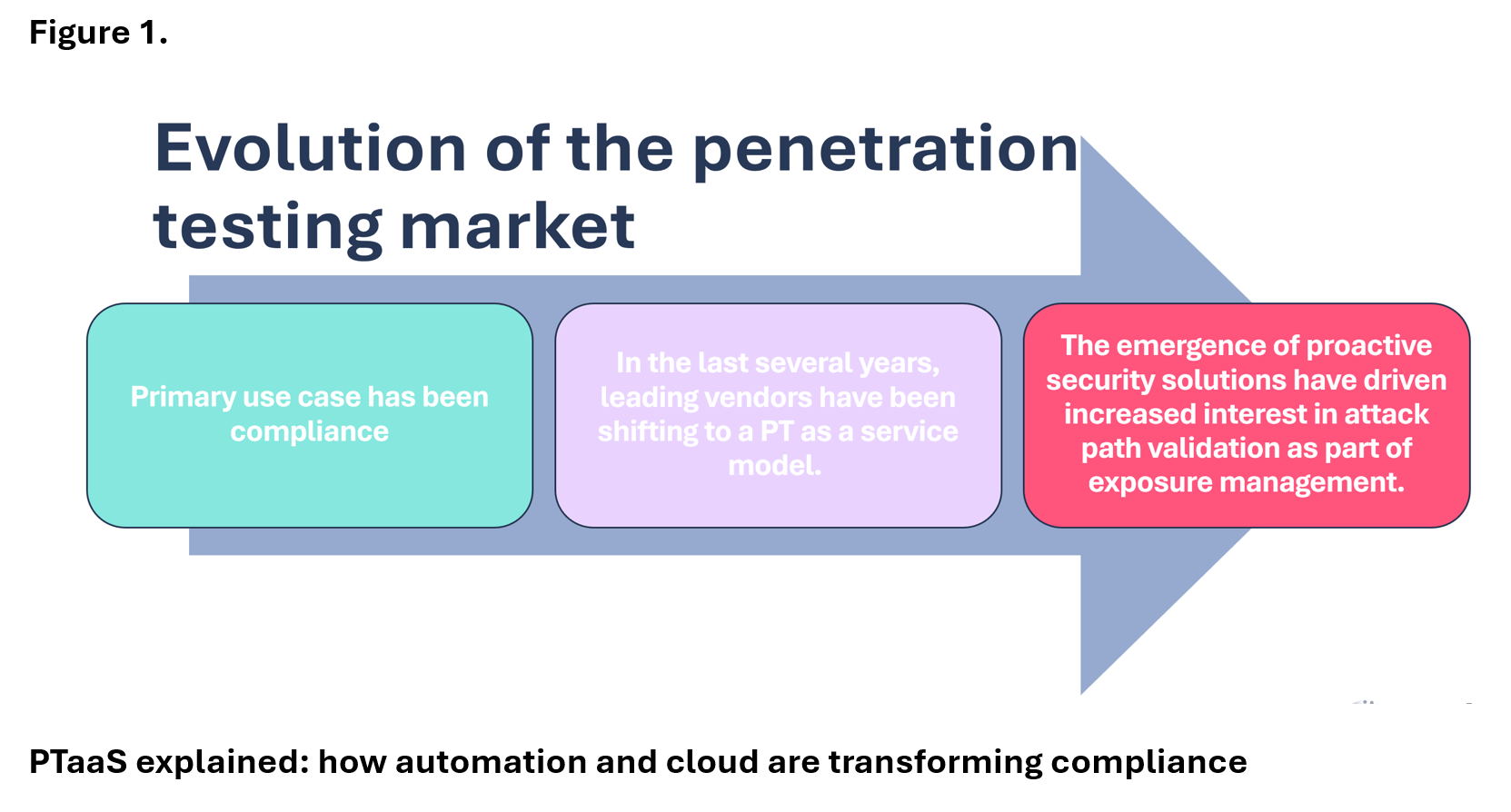
Because of specific regulatory mandates, particularly in the healthcare and financial verticals, a primary use case for pen testing has been meeting compliance requirements. A desire to simplify the consumption of pen-testing services and to increase the cadence with which they could be delivered has led to the emergence of pen testing as a service (PTaaS), which attempts to bring the agility, scale, and user experience of “as a service” offerings to pen testing. Through an on-demand subscription-based model, PTaaS is designed to simplify onboarding, pricing, workflow, and remediation.
The rise of PTaaS has been enabled in part by a focus on automating as many of the steps in an engagement as possible. Customers can have tests performed on demand and can manage tests through self-service dashboards. Tests can also be run “continuously,” in the sense that they can be automatically triggered by changes in the assets being tested or changes in the threat environment. Operating as a cloud-based SaaS product, PTaaS supports the automation of much of the traditional pen-testing workflow and repetitive tasks, such as setting up a new test for an asset that is tested on a regular basis.
PTaaS typically employs multiple automated testing tools to perform reconnaissance, vulnerability detection, and attack surface mapping. Manual testers help verify more complex vulnerabilities, identify false positives, and otherwise aid in investigations. Omdia asserts that finding the right combination of automated and manual testing to ensure speed, scale, cost, and accuracy will be the key to the continued growth of the PTaaS market.
How Agentic AI is changing the penetration testing workflow
Agentic AI is transforming penetration testing by automating key workflow stages and enhancing human tester capabilities across three critical areas:
Intelligence Gathering & Planning: Agentic AI assists penetration testers by automatically collecting and analyzing diverse security policies, rules of engagement, and compliance requirements. The AI correlates evidence from multiple sources and develops systematic discovery pathways to identify, classify, and map data within target environments, significantly reducing manual reconnaissance time.
Automated Execution Activities: AI-powered pen testing platforms can execute pre-approved testing actions autonomously, including conducting proof-of-concept exploits within controlled sandbox environments, running standardized security tests, and performing routine vulnerability assessments. This automation allows human testers to focus on complex, creative attack scenarios that require strategic thinking.
Intelligent Reporting & Task Management: Agentic AI generates comprehensive, evidence-based reports that synthesize testing results into actionable insights. The system automatically creates prioritized tickets and task assignments for human penetration testers, ensuring critical vulnerabilities receive immediate attention while maintaining detailed documentation for compliance and remediation tracking.
People looking into adding Ai pen testing will need to make sure that they select a solution that supports their current pen testers and not directly compete with them. In addition, the solution should provide a degree of continuous pen testing that can be enabled during periods when there is no human oversight, such as during holidays and time off. Finally, it is also crucial to have an AI pen testing solution that has context awareness based on the business model when conducting attack simulations.
Four essential types of penetration testing services
Web application security testing for online platforms: A specialized penetration testing service that systematically evaluates online platforms, e-commerce sites, and web-based applications for critical vulnerabilities such as SQL injection, cross-site scripting (XSS), and authentication bypasses—helping organizations protect sensitive customer data and maintain PCI DSS compliance while preventing costly data breaches and reputational damage.
Network penetration testing for infrastructure assessment: Network penetration testing is a comprehensive cybersecurity assessment that simulates real-world attacks against an organization's IT infrastructure, including firewalls, routers, servers, and internal networks, to identify exploitable vulnerabilities, misconfigurations, and security gaps that could allow unauthorized access to critical systems and sensitive data.
Social engineering simulations and phishing awareness: Social engineering simulations and phishing awareness penetration testing are behavioral cybersecurity assessments that test employee responses to targeted deception campaigns, fraudulent communications, and psychological manipulation tactics through controlled scenarios that identify human vulnerabilities and measure organizational resilience against the most common attack vectors used in modern cyber threats and data breaches.
Wireless security and cloud security evaluations: Wireless security and cloud security evaluations are specialized penetration testing services that assess Wi-Fi networks, mobile device connections, and cloud infrastructure configurations to identify vulnerabilities such as weak encryption protocols, misconfigured access controls, and insecure API endpoints that could expose sensitive data across hybrid and multi-cloud environments.
Key penetration testing vendor & capabilities
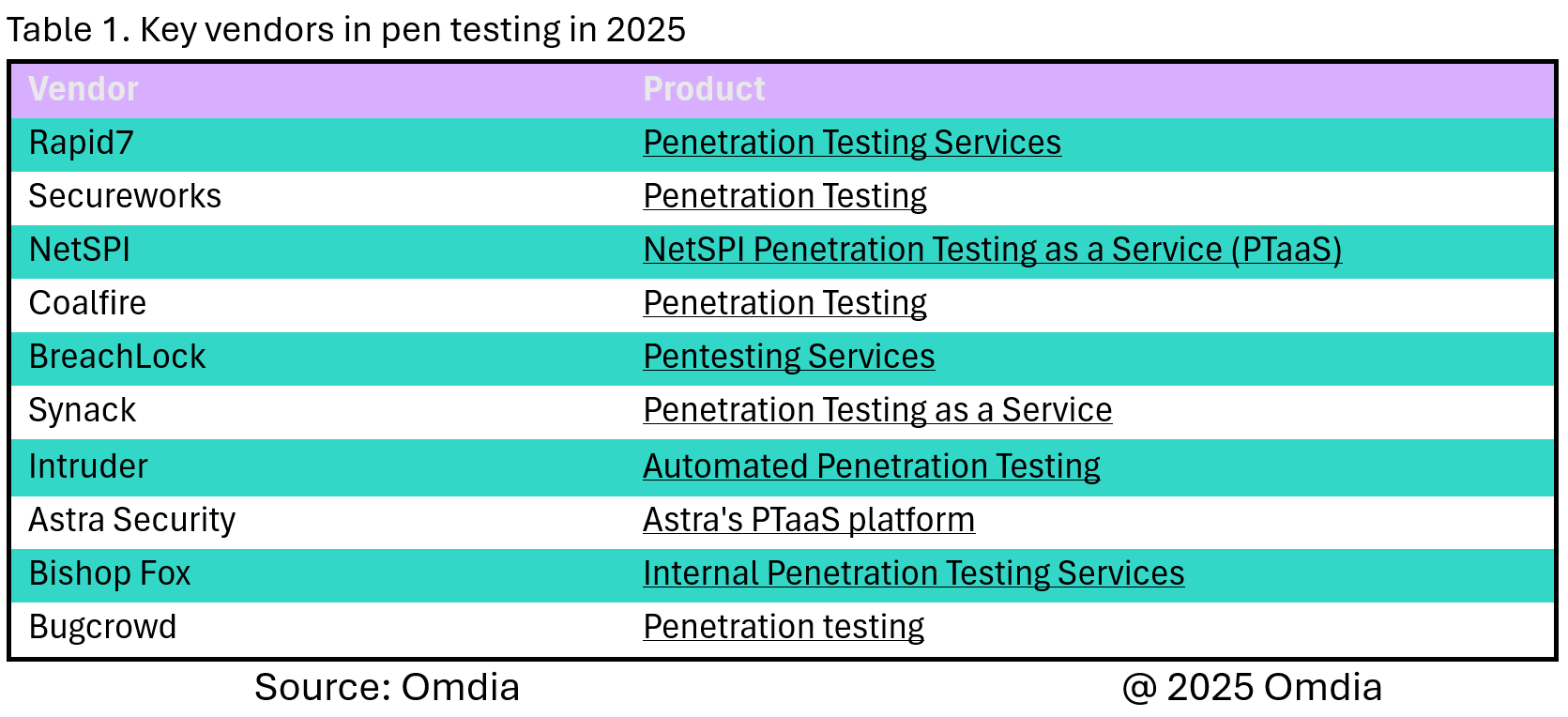
The following are some of the vendors that are in the penetration testing market:
Rapid7 - Delivers network penetration testing, web application security assessments, and wireless security evaluations through its InsightVM platform combined with expert manual testing for comprehensive vulnerability management.
Secureworks - Provides advanced persistent threat simulation, red team exercises, and infrastructure penetration testing with integrated threat intelligence to replicate real-world attack scenarios.
NetSPI - Specializes in application security testing, API penetration testing, and cloud security assessments with expertise in complex enterprise environments and DevSecOps integration.
Coalfire - Offers compliance-driven penetration testing for PCI DSS, HIPAA, and SOX requirements, focusing on network security assessments and regulatory audit preparation.
BreachLock - Provides continuous penetration testing through their PTaaS platform, delivering web application testing, network assessments, and social engineering simulations with real-time reporting.
Synack - Delivers crowdsourced penetration testing using vetted ethical hackers for web application security, mobile app testing, and infrastructure assessments with global scalability.
Intruder - Focuses on automated vulnerability scanning and network penetration testing for SMBs, offering cloud security assessments and external perimeter testing through its SaaS platform.
Astra Security - Specializes in web application penetration testing for e-commerce platforms, providing SQL injection testing, XSS detection, and business logic flaw assessment with malware scanning.
Bishop Fox - Conducts advanced red team operations, application security testing, and infrastructure penetration testing with deep expertise in zero-day research and custom exploit development.
Bugcrowd - Enables continuous security testing through crowd-sourced bug bounty programs, vulnerability disclosure programs, and penetration testing using a global network of security researchers.
We can expect that by 2026, penetration testing will have to evolve into a form of AI-driven continuous security validation, where machine learning algorithms will automatically orchestrate real-time attack simulations against hybrid environments, enabling organizations to achieve continuous penetration testing that adapts to trends in threats and provides instant vulnerability remediation recommendations integrated directly into SOC platforms.
More from author


More insights
Assess the marketplace with our extensive insights collection.
More insightsHear from analysts
When you partner with Omdia, you gain access to our highly rated Ask An Analyst service.
Hear from analystsOmdia Newsroom
Read the latest press releases from Omdia.
Omdia NewsroomSolutions
Leverage unique access to market leading analysts and profit from their deep industry expertise.
Solutions
