


Our latest blog, from Omdia analysts Elvia Finalle, Senior Analyst and Braunberg, Andrew, Principal Analyst, explains why the Asset Discovery, Classification and Monitoring market is transforming in 2025 to 2026, as security use cases take priority and the limits of traditional CMDBs become harder to ignore, prompting security teams to augment CMDB-led workflows with EASM and CAASM tools to improve asset visibility across on-premises, network, endpoint, and cloud environments and support more effective cybersecurity asset management to reduce attack surface and protect security posture.
The asset discovery, classification and monitoring market within cybersecurity market has been changing rapidly since 2024 and continues to evolve through 2025. External Attack Surface Management (EASM) and Cyber Asset Attack Surface Management (CAASM) products are increasingly being deployed to overload security use cases from Configuration Management Database (CMDBs) or to strengthen traditional asset management solutions.
This shift is happening as leading vendors adapt their traditional solutions into products that better address customer needs with the market likely to become more consolidated as we move into 2026.
What is Asset Discovery, Classification and Monitoring, and Why Should You Care?
Asset discovery, classification, and monitoring vendors provide solutions that help organizations identify, categorize, and monitor IT assets not only on premises, but also across networks, endpoints and cloud environments. These solutions typically use techniques such as network scanning, agent deployment, and protocol queries to find devices, software, and configurations, while also supporting asset classification and management.
In the broader cybersecurity landscape, there is often a disconnect between what end users want and what vendors built into IT workflows. Vendors must listen closely to concerns about accurate, reliable asset discovery without placing other parts of IT workflows at risk.
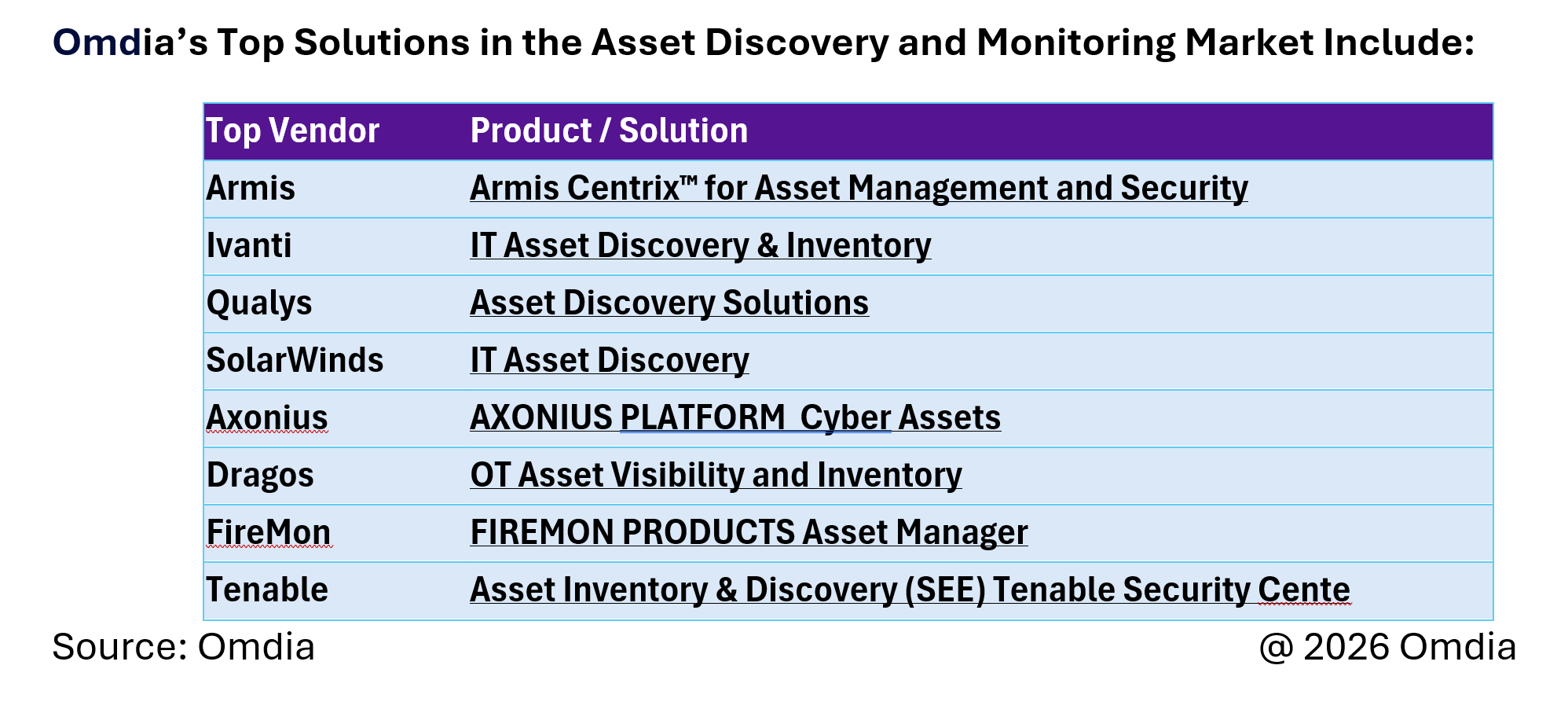
Asset Discovery Vendor Comparison: Key Capabilities by Provider
• Armis: The platform combines traditional asset discovery capabilities with advanced features including segmentation visualization, smart active querying, remote discovery, and secure remote access. It also supports cellular-IoT environments and provides visibility into both managed and unmanaged assets using passive monitoring techniques that do not require agents or network changes to discover and classify devices across complex hybrid infrastructures.
• Ivanti: Offers unified endpoint management with integrated asset discovery that automatically identifies and classifies devices across the network. It provides real-time visibility into hardware and software inventory, while enabling automated patch management and security policy enforcement from a single console.
• Qualys: Its External Attack Surface Management provides cloud-based asset discovery with continuous monitoring of digital assets, specializing in identifying forgotten or overlooked external-facing assets. It integrates vulnerability assessment and compliance monitoring into a unified platform for comprehensive risk management.
• SolarWinds: Builds comprehensive IT asset inventories using its Discovery Agent and Discovery Scanner, continuously scanning networks for IP-connected devices. It maintains up-to-date asset information through automated discovery processes that integrate with broader IT infrastructure monitoring capabilities.
• Axonius: Transforms scattered asset data into complete, accurate, and up-to-date visibility by unifying information from existing security and management tools. It provides continuous asset discovery with in-depth asset profiles, intuitive data visualization, and AI-accelerated smart prioritization for risk identification and coverage gap analysis.
• Dragos: Specializes in industrial control system (ICS) and operational technology (OT) asset discovery and monitoring, providing purpose-built visibility into industrial networks with deep protocol analysis and threat detection capabilities specifically designed for manufacturing, energy, and critical infrastructure environments.
• FireMon: Combines attack surface discovery with security policy management through a policy-driven approach. It provides visibility both inside and outside organizational networks, while helping ensure discovered assets are secured according to organizational standards through integrated security management capabilities.
• Tenable: Tenable Attack Surface Management discovers external assets and helps organizations minimize attack surfaces by prioritizing remediation activities with Tenable Risk Detail, focusing on critical vulnerabilities.
2026 Outlook: Where Asset Discovery, EASM and CAASM Are Headed
Cybersecurity does not stop evolving, so organizations need a proactive view not only of what solutions they plan to adopt, but also which solutions no longer address their specific needs.
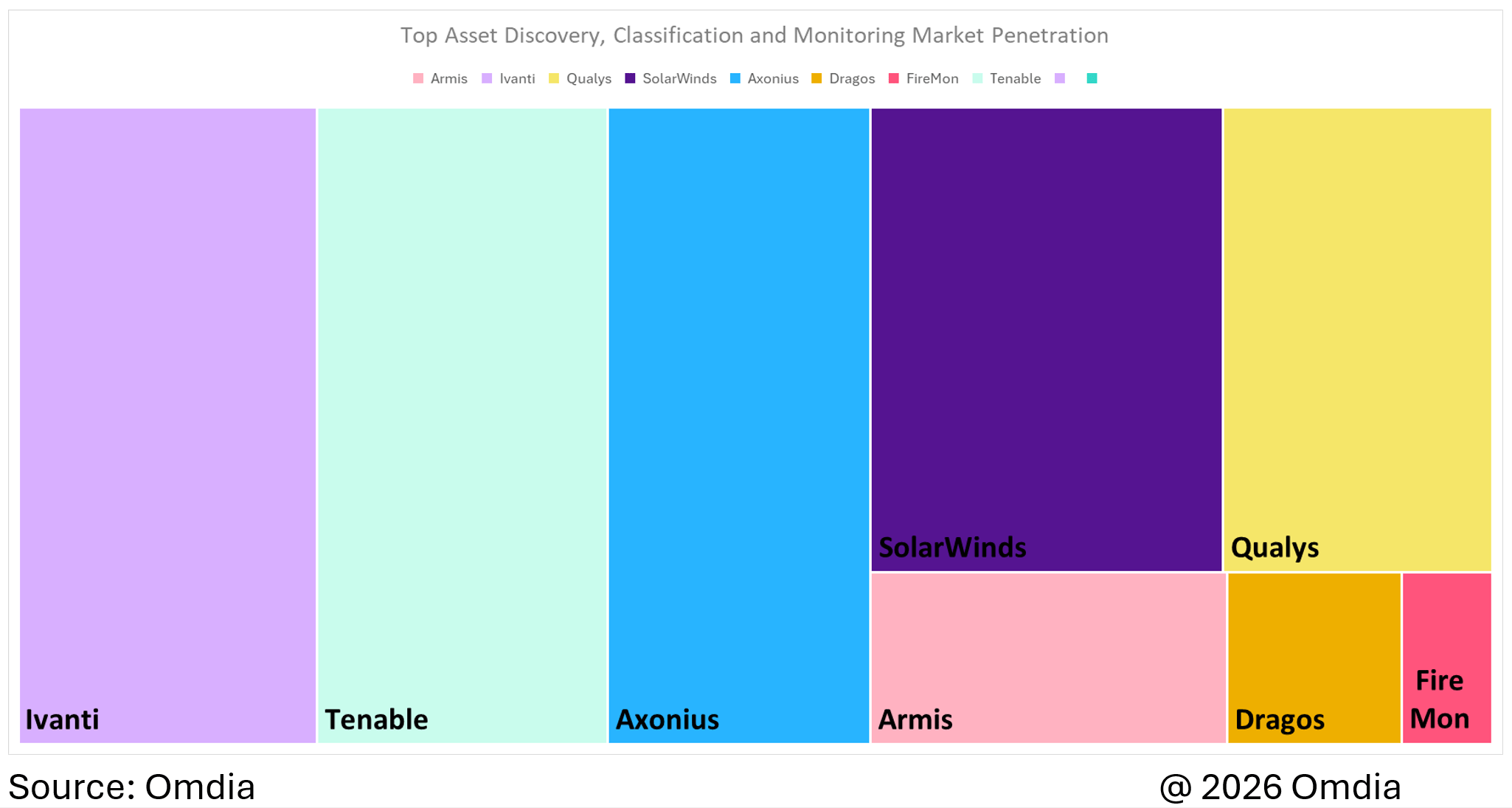
Looking ahead, asset discovery, classification and monitoring will continue to advance toward greater automation, deeper AI integration, and continuous visibility across diverse IT environments. We also expect the market terminology to change as capabilities expand or shift in 2026.
More from author


More insights
Assess the marketplace with our extensive insights collection.
More insightsHear from analysts
When you partner with Omdia, you gain access to our highly rated Ask An Analyst service.
Hear from analystsOmdia Newsroom
Read the latest press releases from Omdia.
Omdia NewsroomSolutions
Leverage unique access to market leading analysts and profit from their deep industry expertise.
Solutions
