

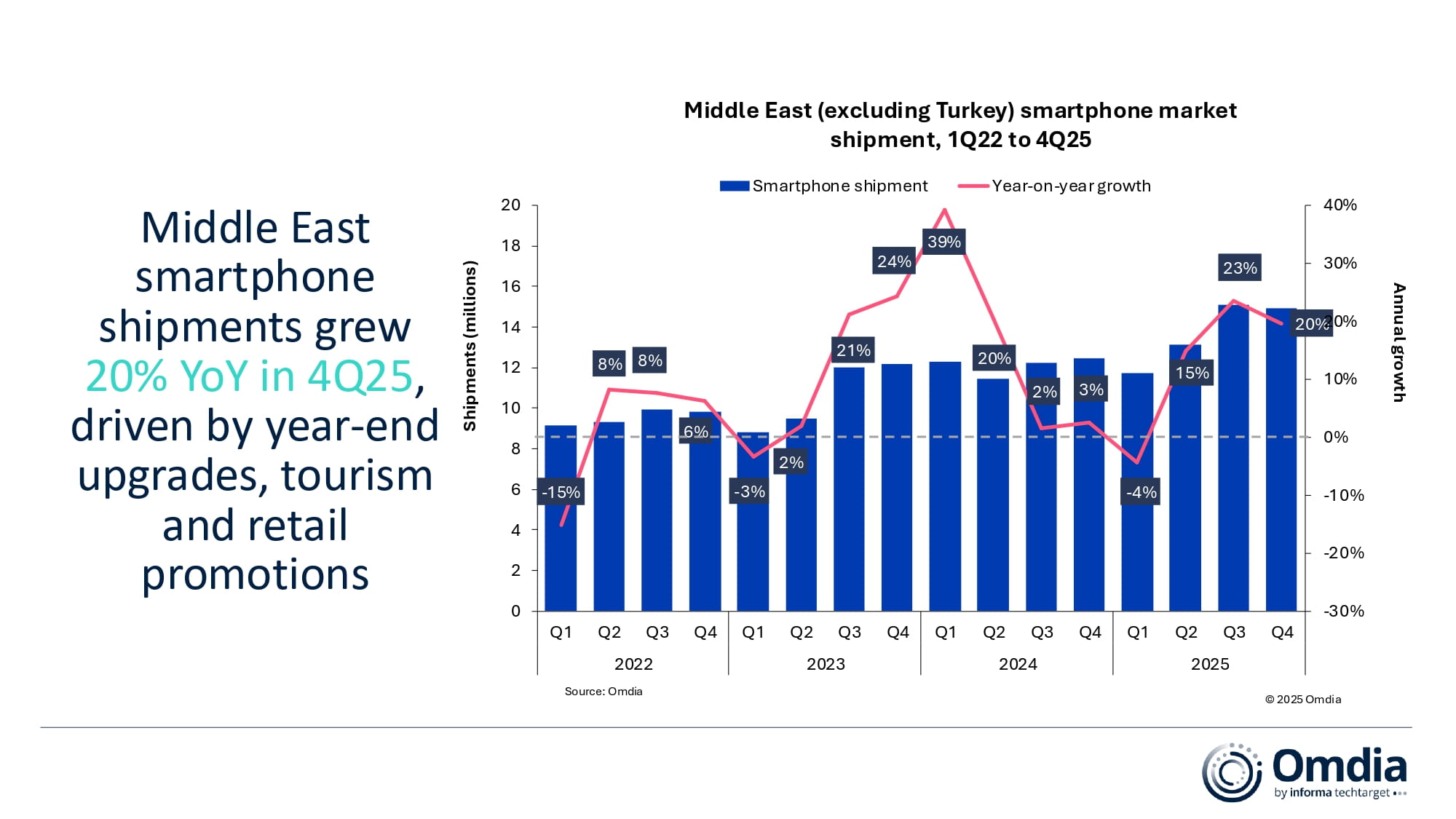
LONDON, February 19, 2026: New research from Omdia shows the Middle East smartphone market (excluding Turkey) closed 2025 on a strong note, with 4Q25 shipments rising 20% year-on-year to 14.9 million units the third consecutive quarter of double-digit growth. Growth was driven by upgrade demand across key Gulf markets, supported by flagship launches, expanded financing and trade-in programs, and sustained retail activity tied to tourism and year-end shopping seasons.
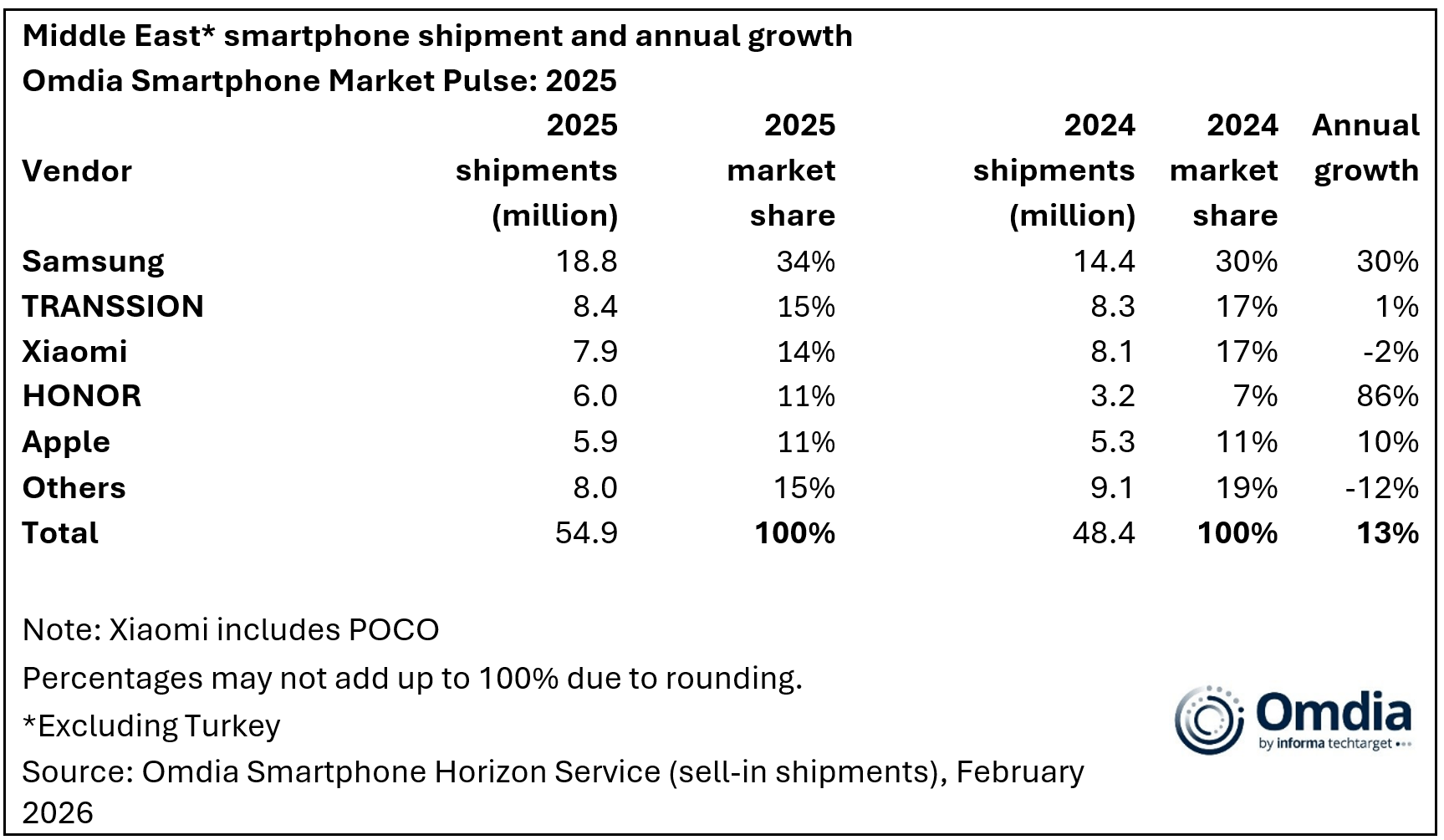
For the full year, smartphone shipments reached 54.8 million smartphones in 2025, up 13% year-on-year and marking a third consecutive year of double-digit growth. The performance reflects continued expansion alongside a gradual shift toward a more mature, value-focused market where profitability and competitive positioning are becoming as important as volume growth.
Saudi Arabia remained the region’s largest market in 4Q25, growing 14% year-on-year to account for roughly 27% of total shipments, supported by stable upgrade demand and strong channel replenishment. The UAE expanded 12% as product refresh cycles and promotional activity sustained replacement demand across its concentrated retail landscape. Kuwait (+8%) and Qatar (+6%) delivered steady, replacement-driven growth, while the broader Rest of Middle East cluster recorded a sharp increase, due to improved device availability and deeper vendor reach across secondary markets. Iraq maintained meaningful scale despite softer performance, highlighting continued demand alongside ongoing market volatility.
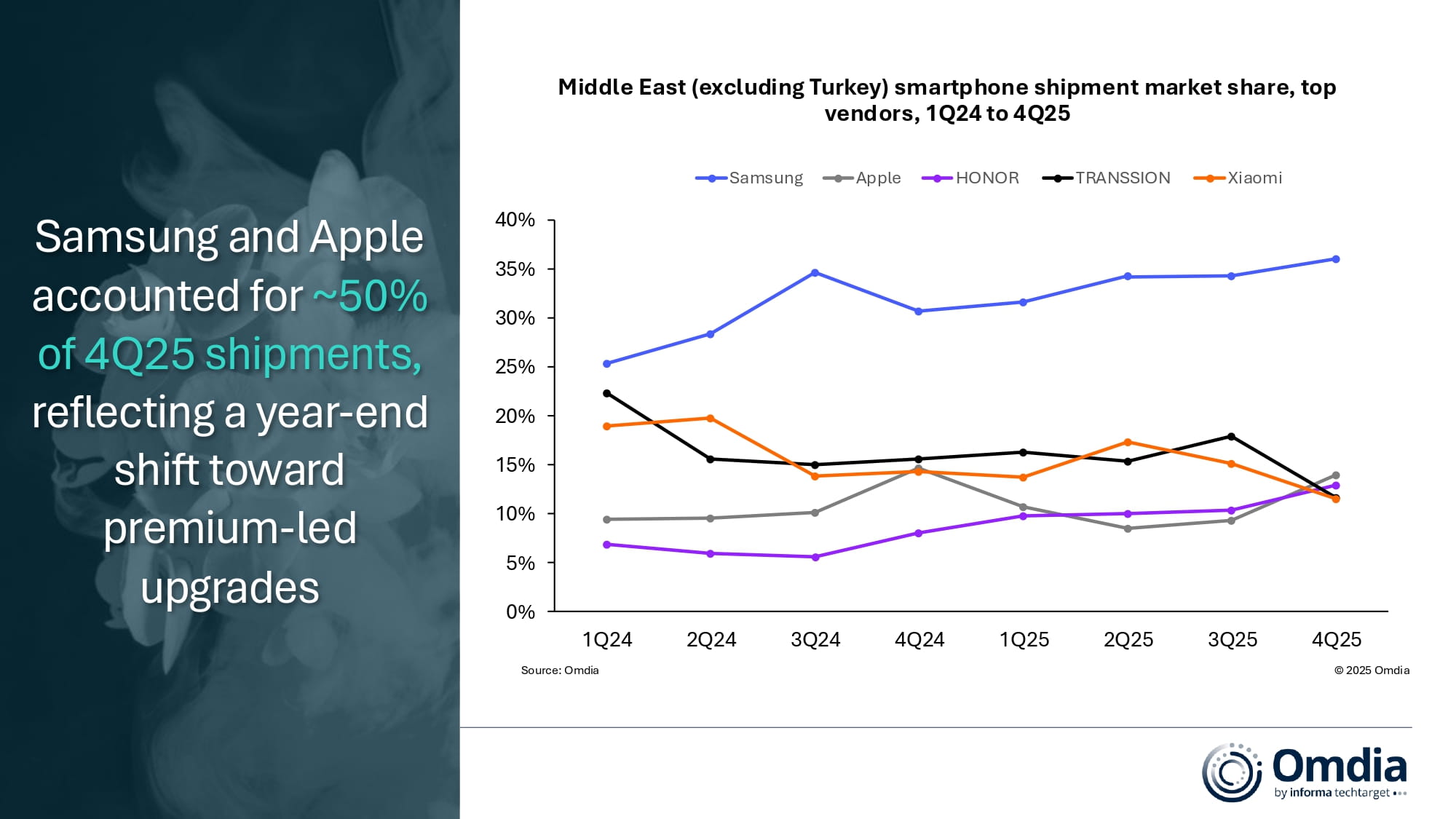
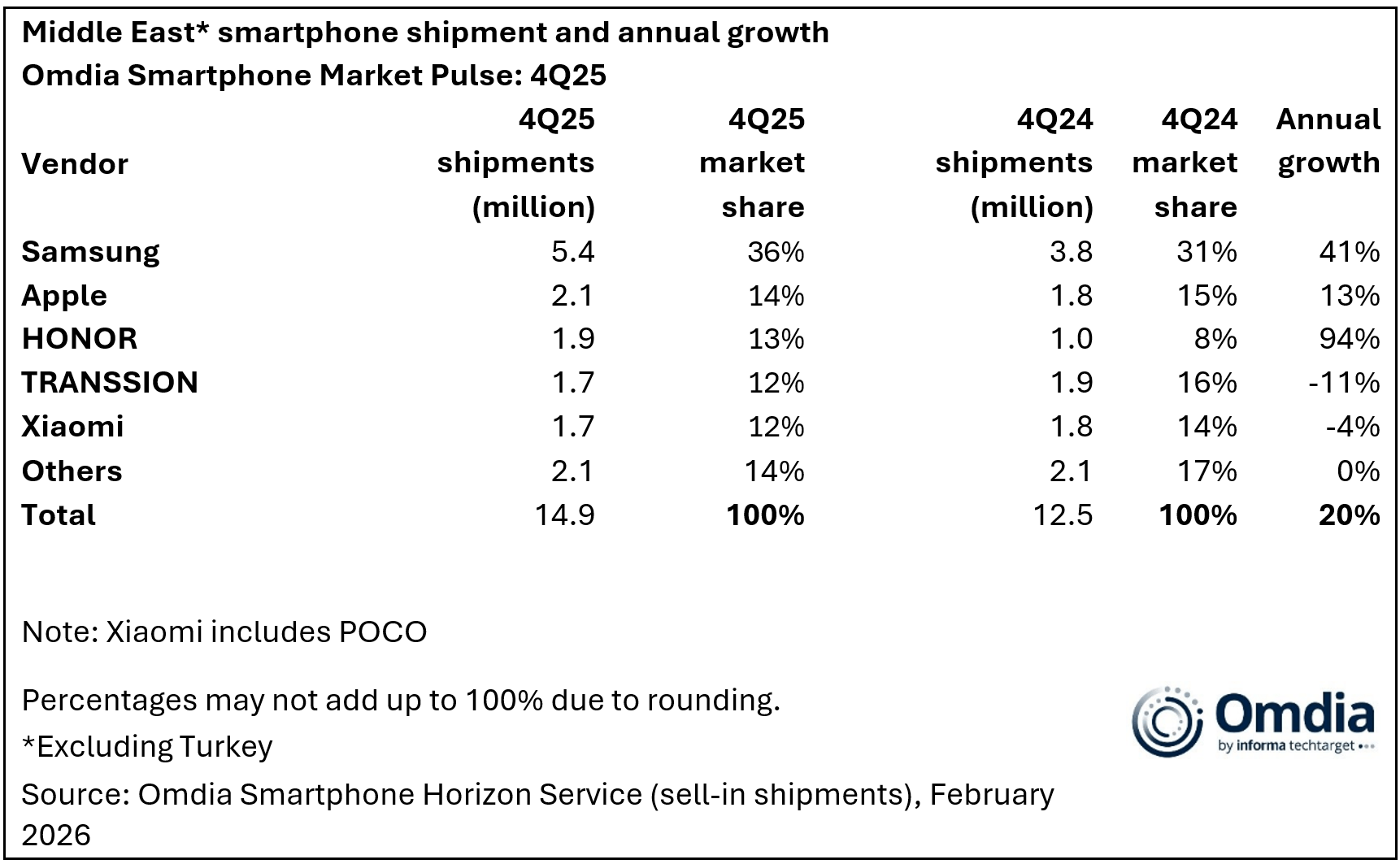
“Samsung and Apple dominated the region’s year-end cycle, together accounting for roughly half of all shipments in 4Q25,” said Manish Pravinkumar, Principal Analyst at Omdia. “Upgrade demand remains concentrated around strong brand ecosystems and well-segmented portfolios. Samsung’s growth was led by the Galaxy S25 series and volume drivers including the Galaxy A36, A56 and A16. Apple recorded steady expansion on the back of iPhone 17 upgrades and sustained retail activity across key Gulf markets, reinforcing premium- and upper-mid-led replacement dynamics.”
“HONOR was the fastest-growing major vendor in 4Q25, with shipments rising 94% year-on-year as its expanded X series and more premium-focused positioning gained traction across retail channels. TRANSSION saw shipments decline during the quarter but continued to pivot toward a more value-oriented mix, with TECNO supporting performance in key markets such as Saudi Arabia, Iraq and Kuwait. Xiaomi recorded a modest decline, reflecting its reliance on entry-level volumes, where models such as the Redmi A5 and Redmi 15C remained primary shipment drivers, targeting the region’s large expatriate consumer base, even as it gradually expands channel activities around higher price-band models, such as the Note 15 Pro and Xiaomi 15T.”
“Shipments are expected to decline 8% in 2026, reflecting tighter supply conditions and with a slowdown slightly deeper than the global average,” says Pravinkumar. “Vendors are likely to prioritize scale markets such as Saudi Arabia and the UAE, where tourism, infrastructure investments, mature financing ecosystems continue to support premium demand. However, more price-sensitive markets, such as Iraq, will remain vulnerable to policy shifts, import costs and affordability constraints. As component costs rise and supply becomes more selective, Apple and Samsung are expected to remain comparatively stable, whereas volume-driven Chinese OEMs will face greater pressure to balance share and profitability. Beyond 2026, the region is set to transition toward steadier, replacement-led growth rather than the sharp swings seen in recent years.”
More insights
Assess the marketplace with our extensive insights collection.
More insightsHear from analysts
When you partner with Omdia, you gain access to our highly rated Ask An Analyst service.
Hear from analystsOmdia Newsroom
Read the latest press releases from Omdia.
Omdia NewsroomSolutions
Leverage unique access to market leading analysts and profit from their deep industry expertise.
Solutions