


LONDON, January 22, 2026: Global smartphone AMOLED shipments are forecast to decline to 810 million units in 2026, down from 817 million units in 2025, according to Omdia’s Smartphone Display Intelligence Service. This would mark the first year-on-year contraction in AMOLED shipments after three consecutive years of growth.
The expected decline is attributed to the shortage of memory supply and rapidly rising memory prices, which have led smartphone manufacturers to scale back 2026 shipment and procurement plans. Smartphone manufacturers are reluctant to pass higher memory costs on to consumers, amid concerns that retail price hikes could reduce demand and slow replacement cycles.
As a result, AMOLED panels, which are still in an expansion phase in terms of capacity and supply, have become a primary target for smartphone manufacturers looking to offset some of the memory price increases.
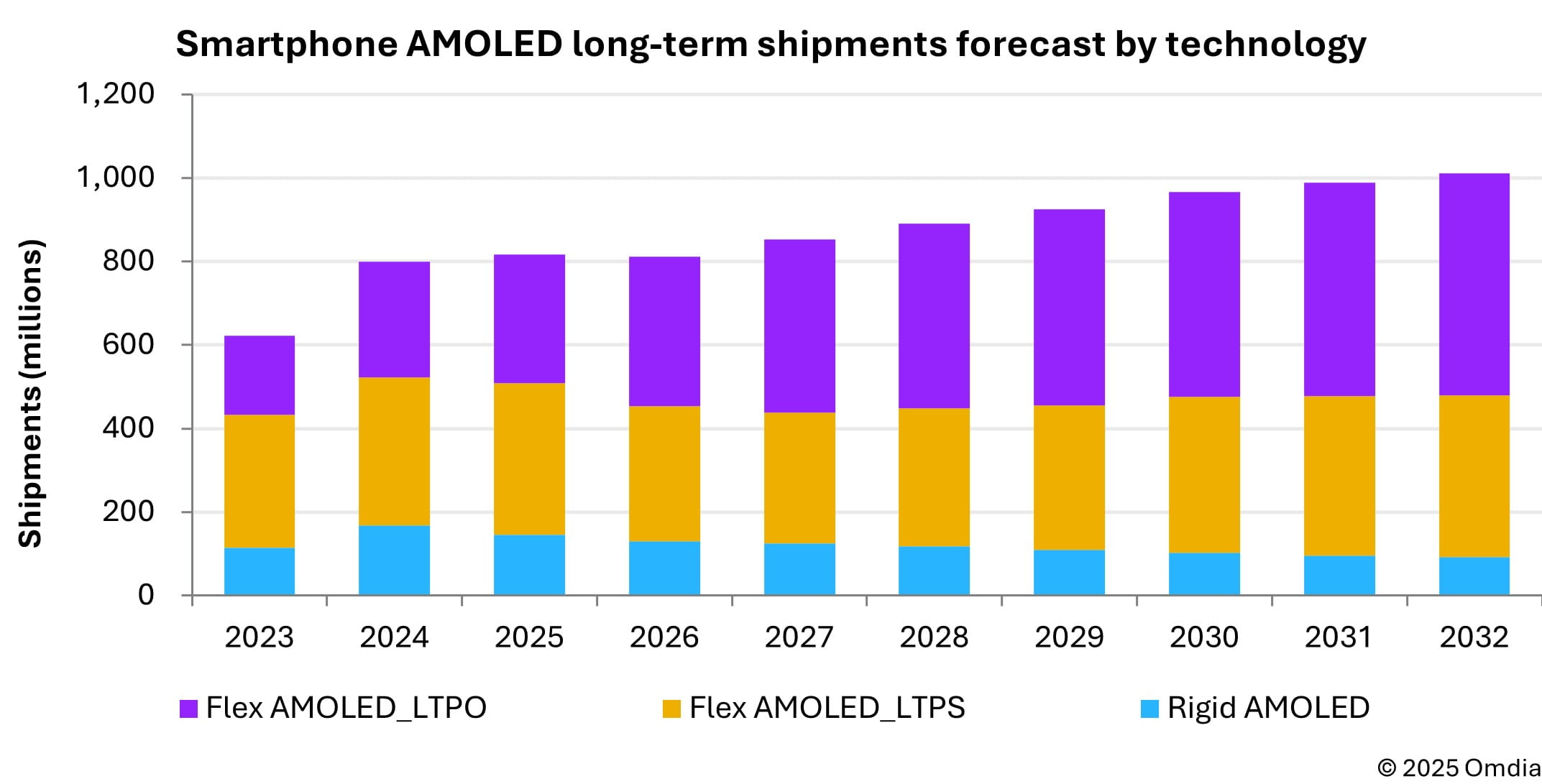
However, the scope for further AMOLED price reductions is limited. Memory cost increases are now approaching or, in some configurations, exceeding display cost, while AMOLED manufacturers already pushed aggressive pricing reductions in 2025 to compete for share, leaving less headroom for additional cuts in 2026.
The immediate driver of the current memory supply shortage and price hikes is surging demand from AI servers, which is absorbing capacity and tightening supply across the broader consumer electronics ecosystem. There is also a less widely recognized contributor: ongoing geopolitical tensions, alongside a shift towards U.S. interest-rate cuts and a weaker dollar, have encouraged more speculative capital into dollar-denominated commodity markets including gold, silver, copper and semiconductors. This has led to repricing across basic materials, which are upstream components for electronic products, pushing imported inflation onto midstream and downstream manufacturers.
“Many smartphone makers still rely on a product-line, cost-down mindset, assuming pressure can be pushed upstream to oversupplied components such as AMOLED panels to contain Bill of Materials (BOM) inflation,” said Joy Guo, Principal Analyst at Omdia’s Displays practice. “But that assumption is likely to face greater resistance this cycle. Many manufacturers have yet to fully recognize the supply chain impact of bulk commodity repricing on the electronics industry. If upstream costs have already shifted structurally while downstream plans continue to push forward out to inertia, risks can build across the supply chain. In that context, we remain cautious on the smartphone AMOLED shipment outlook for 2026.”
More insights
Assess the marketplace with our extensive insights collection.
More insightsHear from analysts
When you partner with Omdia, you gain access to our highly rated Ask An Analyst service.
Hear from analystsOmdia Newsroom
Read the latest press releases from Omdia.
Omdia NewsroomSolutions
Leverage unique access to market leading analysts and profit from their deep industry expertise.
Solutions